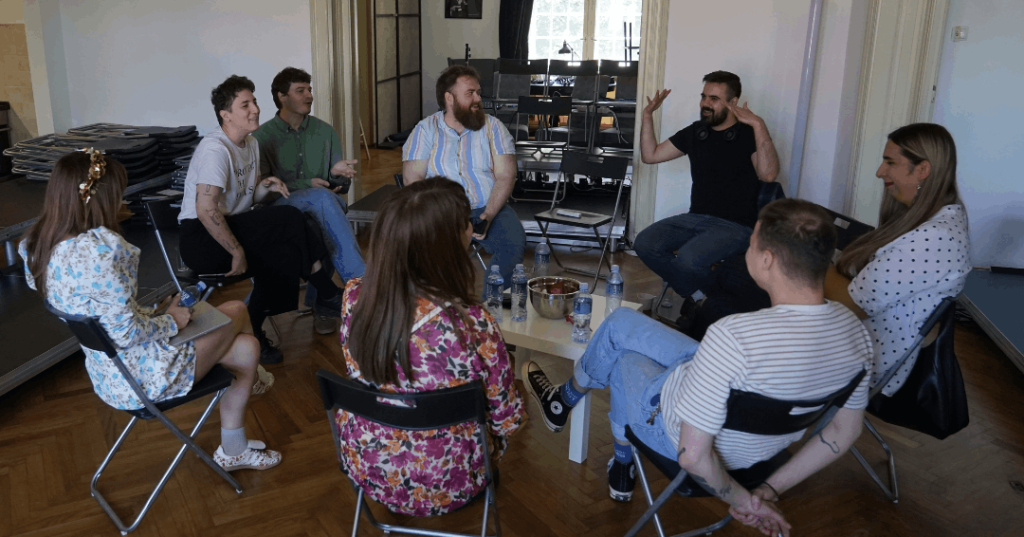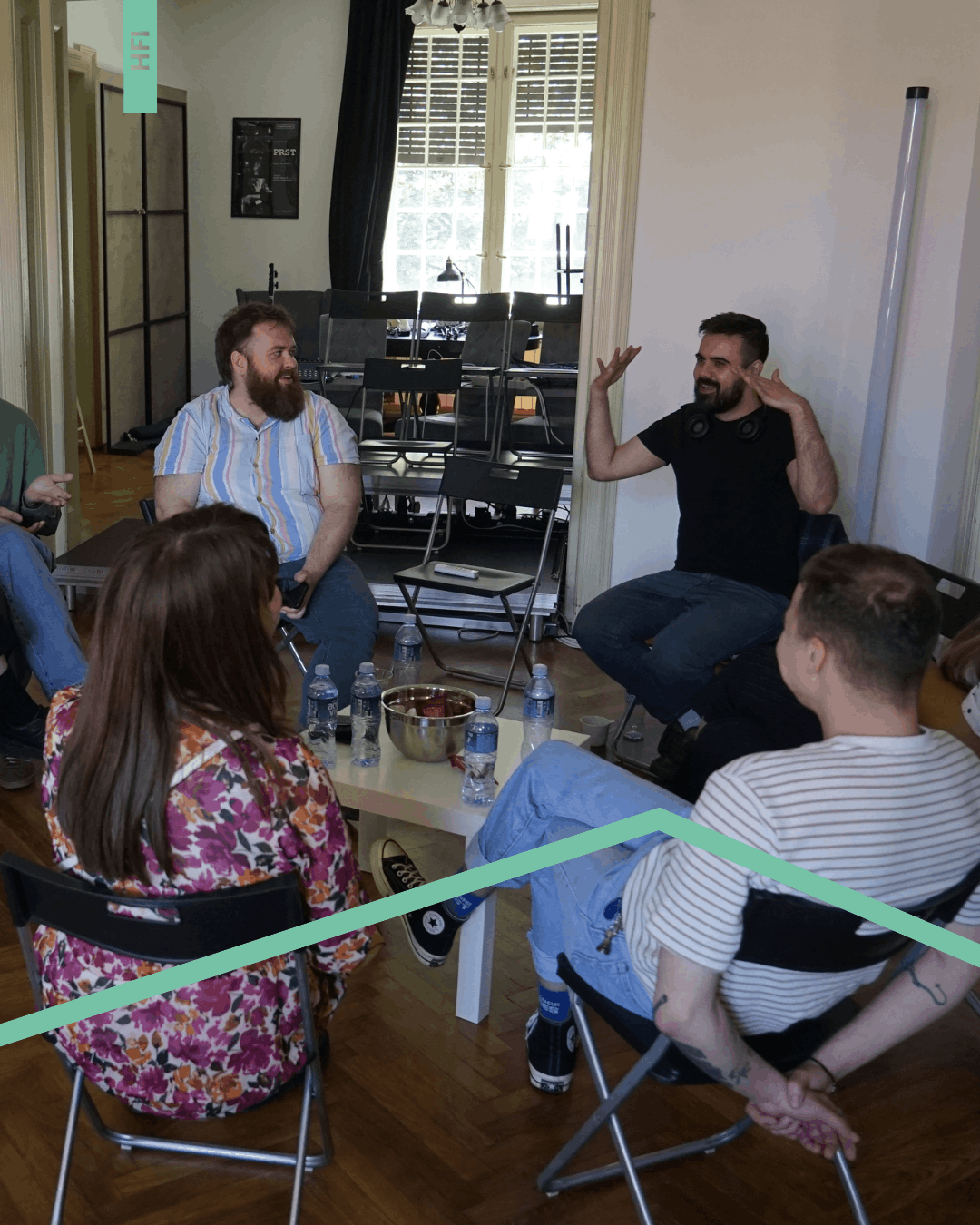
Participants from all three generations of the Human Rights Leadership Program gathered in Belgrade on 8 and 9 June for the annual alumni meeting dedicated to exchanging experiences, strengthening connections, and discussing issues that shape their professional and activist engagement.
Over the course of the two-day programme, participants explored topics related to memory and remembrance, the position of minority communities, and women’s and LGBTQIA+ rights. The gathering opened with the workshop “Who Is Missing,” led by British trans author and theatre-maker Emma Frankland. Following the workshop, participants attended the performance “They Are All Gone” at Heartefact House, a play that addresses the genocide in Srebrenica while opening broader conversations about memory, responsibility, and the position of women in society. After the performance, participants had the opportunity to meet and engage in conversation with the cast and creative team, gaining insight into the development of the artistic process and the creation of the production.
On the second day, participants from all generations of the programme came together for a roundtable discussion. Reflecting on their experiences, challenges, and opportunities for future collaboration, they exchanged perspectives on continued engagement in the field of human rights and the role of the alumni community in developing new initiatives. Following the roundtable discussion, participants continued the conversation during a working lunch with director Tara Manić and members of the Heartefact team. The discussion focused on work in the fields of culture, human rights, and social engagement. The annual gathering concluded with Emma Frankland’s performance “No Apologies!” which explores questions of trans identity, belonging, and visibility.
The program is part of a broader project supported by the European Union, through which Heartefact works intensively to improve the state of human rights in Serbia. Through work with activists, artistic production, public campaigns, and other advocacy initiatives, the project aims to contribute to sustainable change and the development of an inclusive society that respects and protects the rights of all citizens.