

The Playground workshop for the development of a dramatic text was held in Belgrade, at Heartefact House, from November 3 to November 9, 2025. The workshop was led by actress and professor of acting Marija Milenković, with director Patrik Lazić accompanying and facilitating the process. The workshop focused on developing the new play by Italian playwright Francesca Garolla.
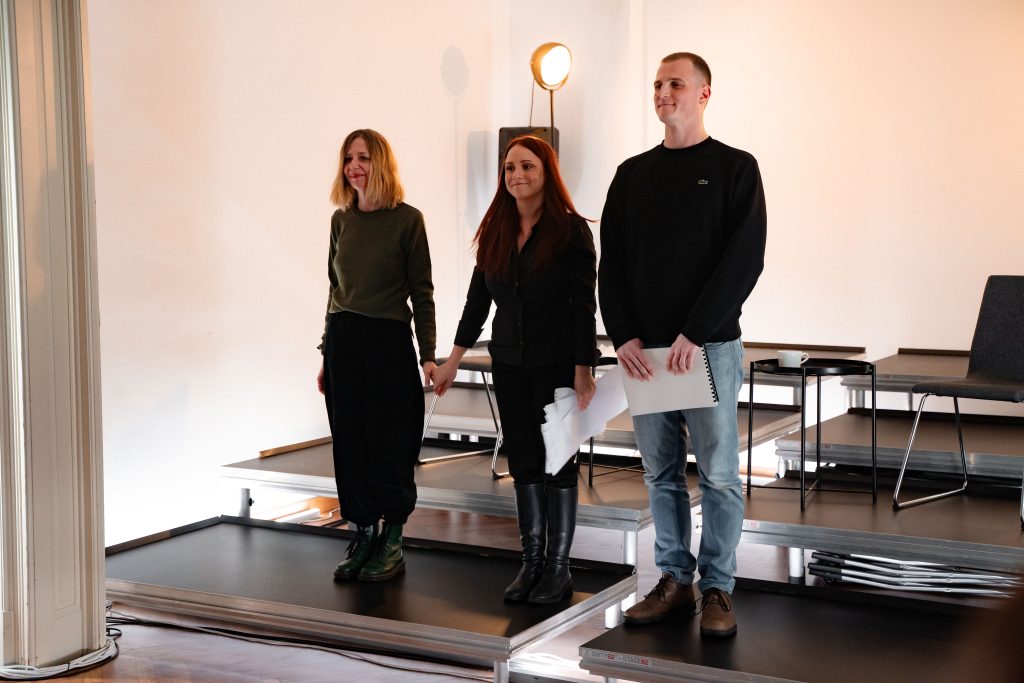
The workshop brought together a creative team consisting of actors Stojša Oljačić and Nevena Mihajlović, as well as translator Julijana Vučo.
Francesca Garolla is a Milan-based playwright, dramaturg, and director, known for writing that moves between real events and the fiction that emerges when memory attempts to shape experience into narrative form. “We are nothing but a story—words that try to give shape to the chaos of things that happened once and will never happen again,” Garolla says, capturing one of the foundations of her artistic work.
She studied philosophy at the University of Milan and later completed her directing studies at the Paolo Grassi School of Dramatic Arts. She has been a longtime collaborator of Teatro i in Milan, where she has worked as a dramaturg, performer, and artistic associate, with a particular focus on contemporary dramaturgy. In 2020/2021, she was the only European playwright selected for a residency at the Cité Internationale des Arts in Paris, where she wrote Se ci fosse luce. In addition to her authorial work, she teaches dramaturgy, creative writing, and text analysis in Italy, Switzerland, and France.
Francesca’s text emerges from a personal historical experience. On May 29, 1993, a humanitarian convoy traveling toward Vitez and Zavidovići in Bosnia and Herzegovina was ambushed on a road known as the Diamond Route. Three people were killed, among them the playwright’s uncle. Francesca was not yet twelve years old. From this real, yet temporally distant and fragmentary event, the play constructs a theatrical investigation through two parallel monologues—a man and a woman, a couple sharing the stage but not the same time. They revolve around a death, but the question remains: whose? The play explores themes of narration, memory, and loss: how we give meaning to grief, why some deaths are framed as “heroic” while others seem “absurdly pointless,” and what remains of truth once the event itself has already vanished…
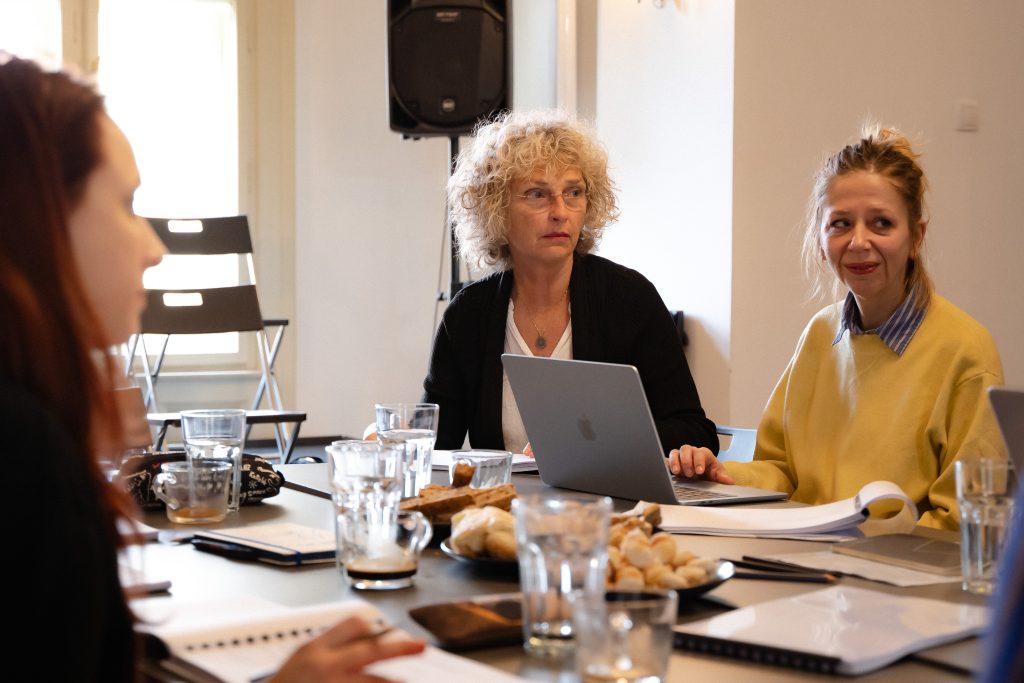
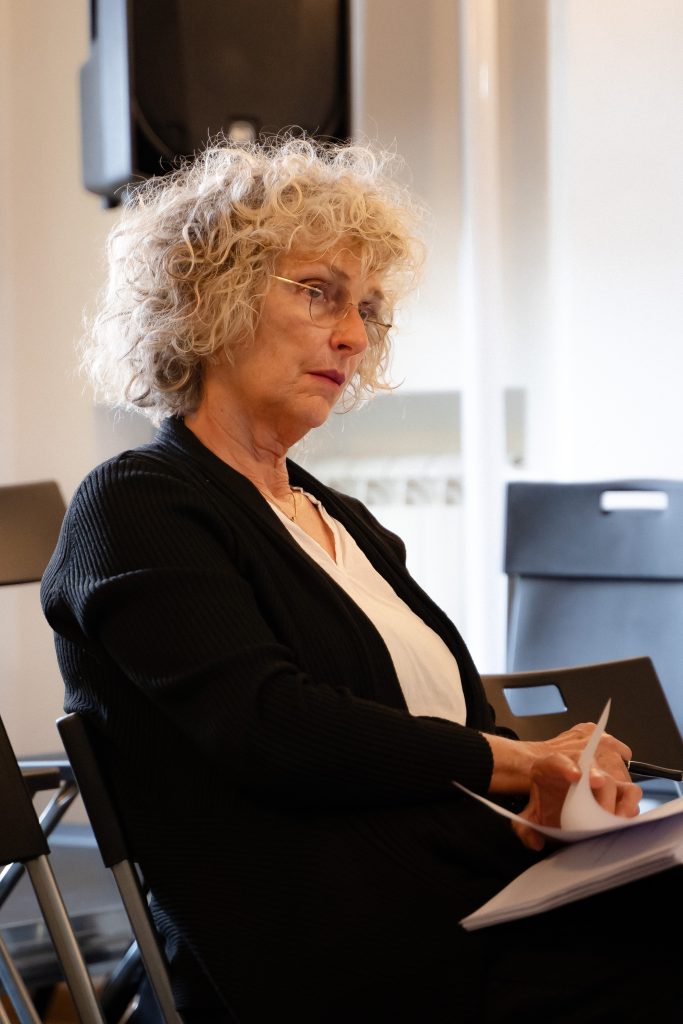
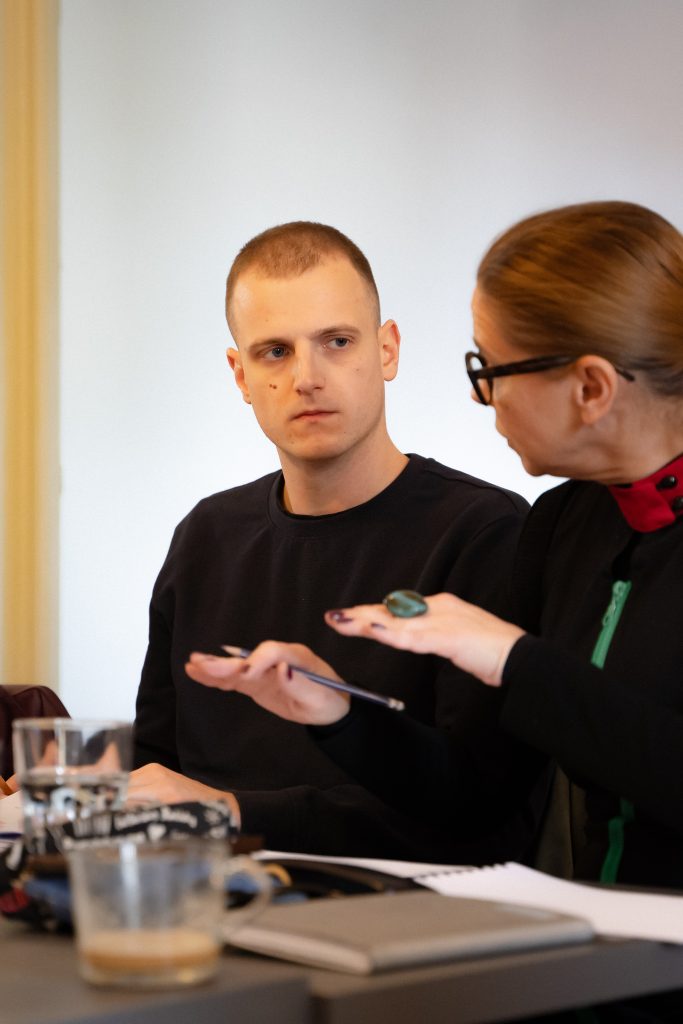
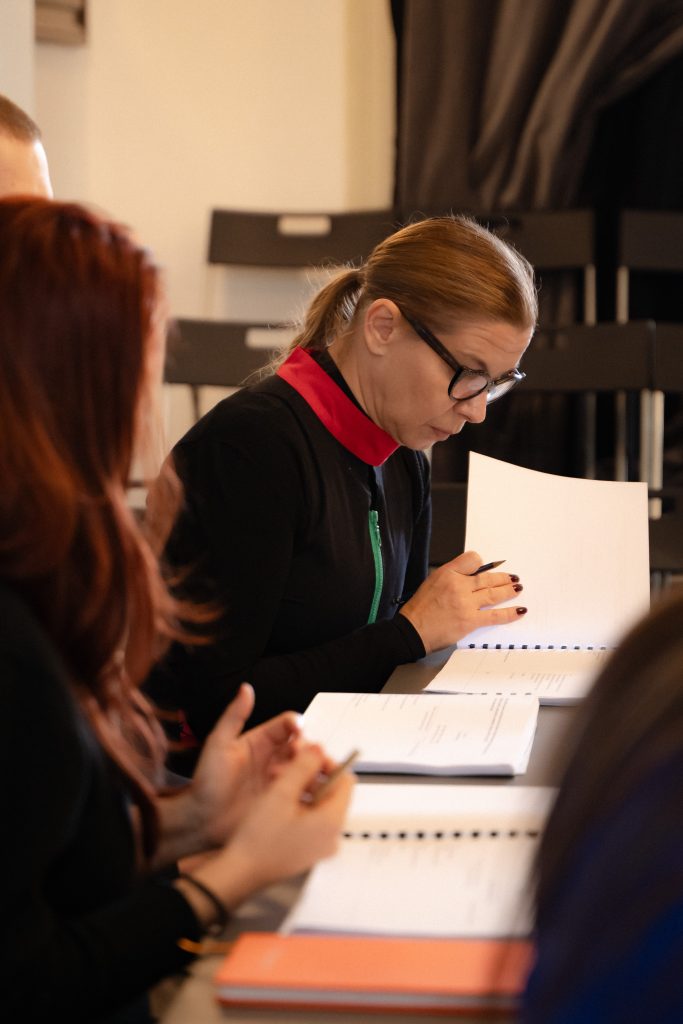
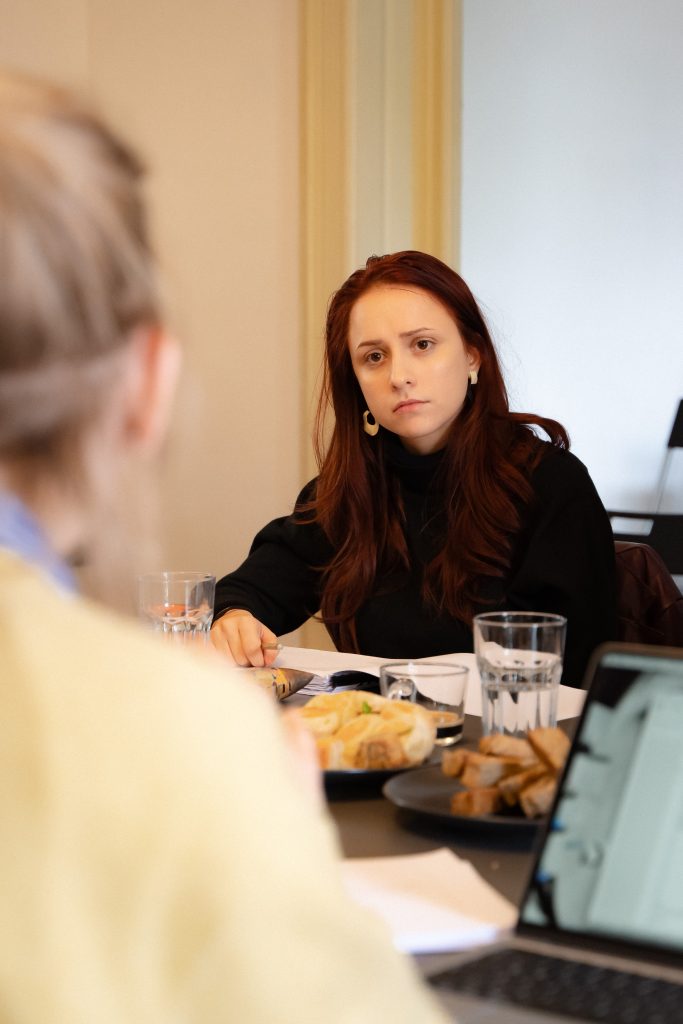
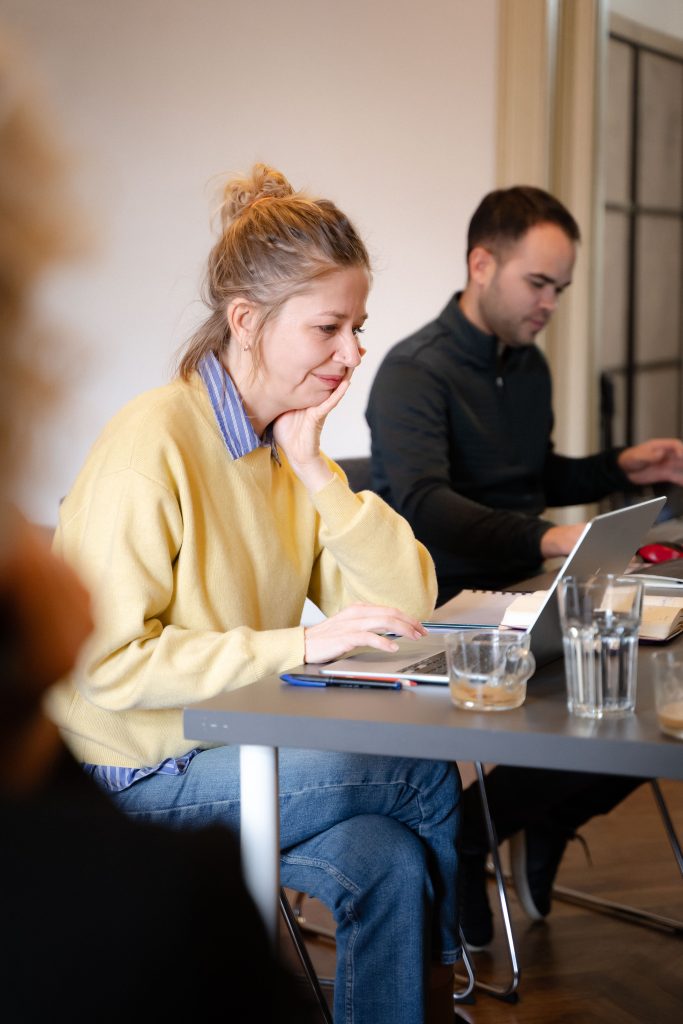
In the first phase of the workshop, the focus was on table readings during which the actors engaged in a detailed analysis of the text, exploring events, characters, and the narrative structure. During this phase, the author continued to develop and refine the play, responding to the performers’ questions and to dramaturgical and linguistic observations that emerged through the live process. Particular attention was given to translation—both linguistic and cultural—considering the context of Bosnia and Herzegovina in 1993 and the way the story resonates within the contemporary Serbian setting. A significant contribution to this aspect of the work was provided by the award-winning translator Julijana Vučo.
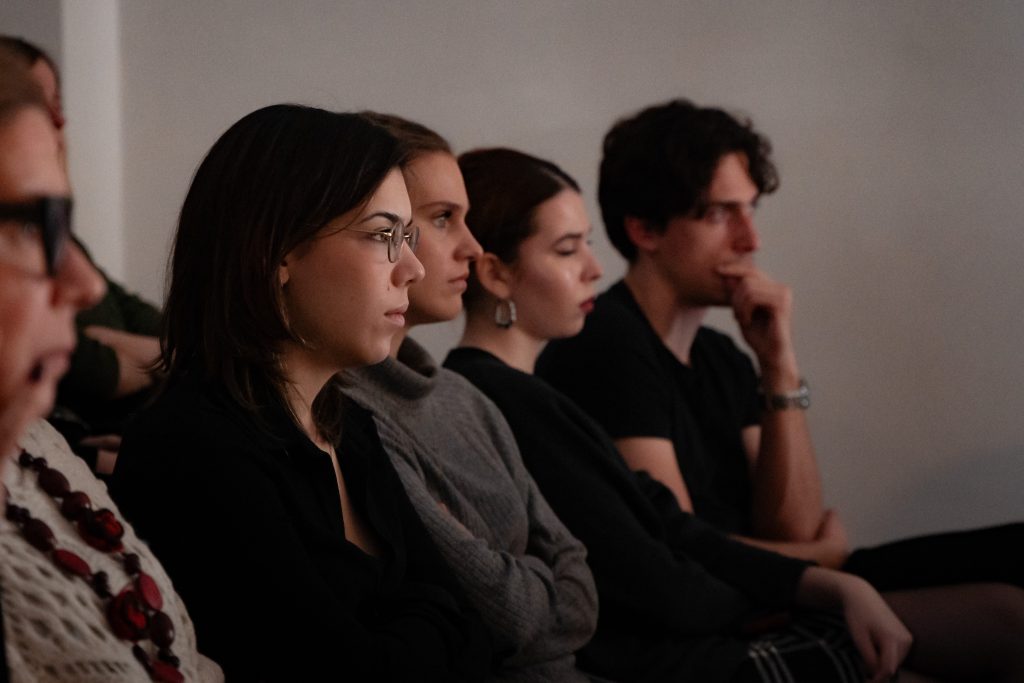
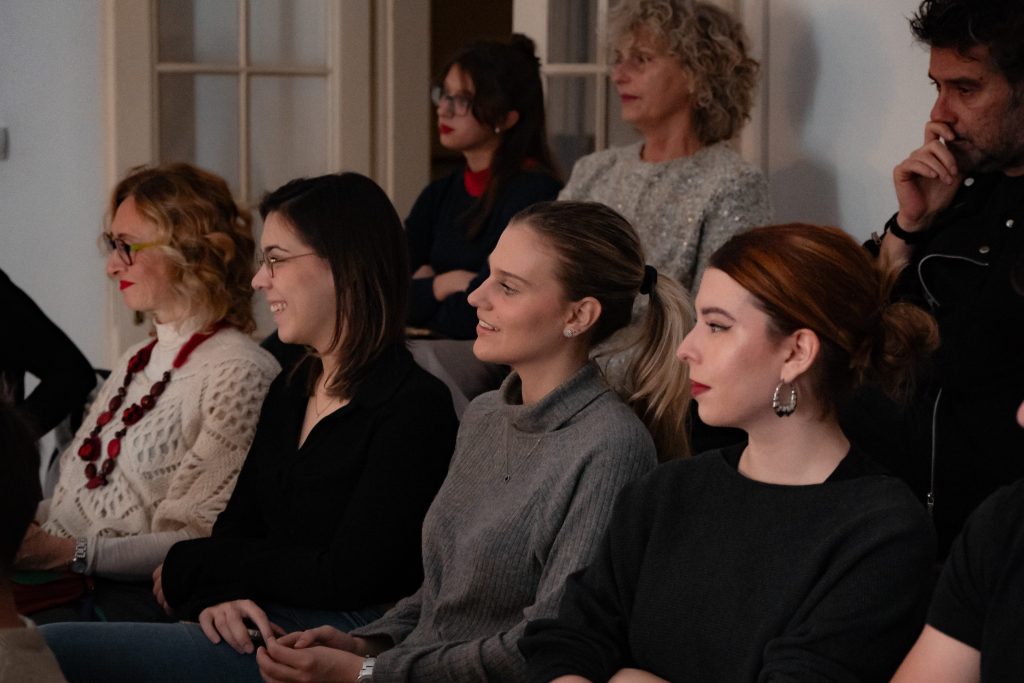
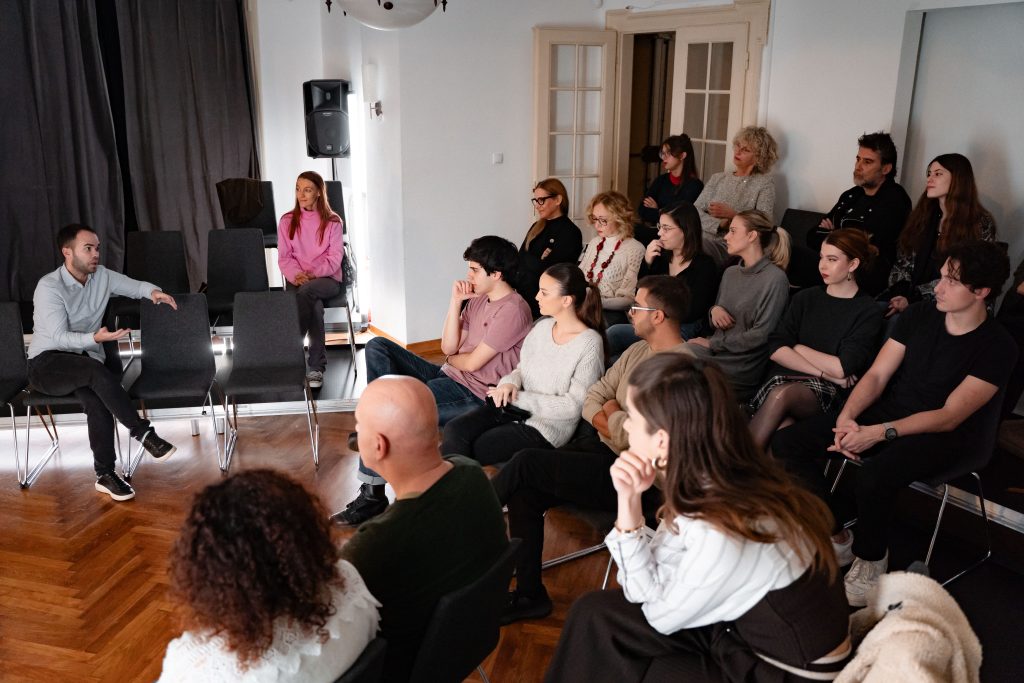
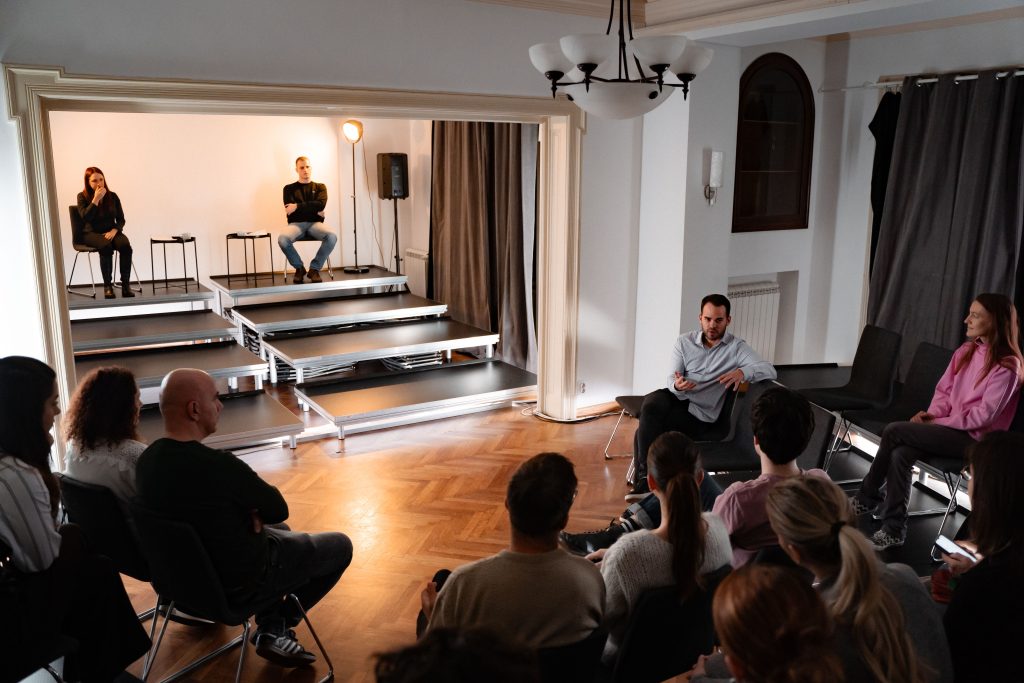
On Saturday, November 8, a public reading of the text was held, followed by a moderated discussion. The audience became an active collaborator in the development of the play, sharing their impressions. Through this dialogue, Francesca received valuable insights from the local audience about how the text resonates in this context.
The workshop was organized as part of the European project Playground, through which we develop an innovative methodology for process-based play development. The project is funded by the European Union through the Creative Europe programme.
Milena Arsenić Petrović