

As part of the first cycle of the Kosovo-Serbia Fellowship Program, Heartefact has chosen seven researchers who will explore new and constructive narratives regarding Kosovo and Serbia, ranging from political issues to economy, business, culture, war-related legacies, and other relevant political and social areas. During the three-month research period, participants will spend one month in either Belgrade or Pristina, depending on their place of residence. Throughout the program, they will have the opportunity to influence dominant narratives and offer new perspectives to the public on the topic of their research.
The selected candidates, consisting of young professionals at the beginning of their careers and experienced professionals in their fields, include four persons from Kosovo and three from Serbia:

STEFAN SURLIĆ (Belgrade), an Assistant Professor at the Faculty of Political Sciences, University of Belgrade, plans to research how the Brussels Agreement and its Annex of the Ohrid Agreement influence the attitudes of five EU member states which do not recognize Kosovo’s independence nor its membership in international organizations. His research involves collecting and analyzing data from relevant documents, agreements reached, written articles, and non-paper documents related to the implementation of agreements between Kosovo and Serbia, with a specific focus on parts pertaining to Kosovo’s international representation. Stefan plans to interview representatives of the five ‘non-recognizers’ who have missions in Belgrade and Prishtina, and analyze changes in their attitudes toward Kosovo’s independence.
Keywords: Kosovo in international organizations, ’non-recognizers’, Brussels Agreement

NORA AHMETAJ (Prishtina), an experienced researcher and activist in the field of human rights, with a special focus on women’s rights and animal rights, plans to conduct a detailed investigation into the economic aspects of reconciliation and its reciprocal relationship with progress, specifically focusing the on business communities in Kosovo and Serbia. During her research, Nora will conduct around ten interviews with businessmen in Serbia and Kosovo. The research focuses on “economic reconciliation,” exploring the barriers that hinder economic development. Her goal is to highlight the crucial role that economic development plays in peacebuilding and vice versa, demonstrating how peacebuilding efforts can stimulate economic growth.
Keywords: economic reconciliation, economic development, business

NAĐA BOBIČIĆ (Belgrade), a Research Associate at the Faculty of Political Sciences, University of Belgrade, who completed her PhD studies investigating feminism in Yugoslavia between 1975 and 1990, continues her research on this topic. Nađa will focus on shedding light on examples of collaboration among women in Kosovo and Serbia during two extreme historical periods: World War II and the Kosovo War of 1998-1999. Through a comparative analysis of archival printed media materials, her goal is to uncover narratives of resistance, collaboration, and anti-war initiatives that have been systematically erased and forgotten from the collective memory of both Serbian and Kosovo societies. To present the research findings, Nađa will also produce several podcast episodes.
Keywords: feminism, resistance movement, forgotten narratives
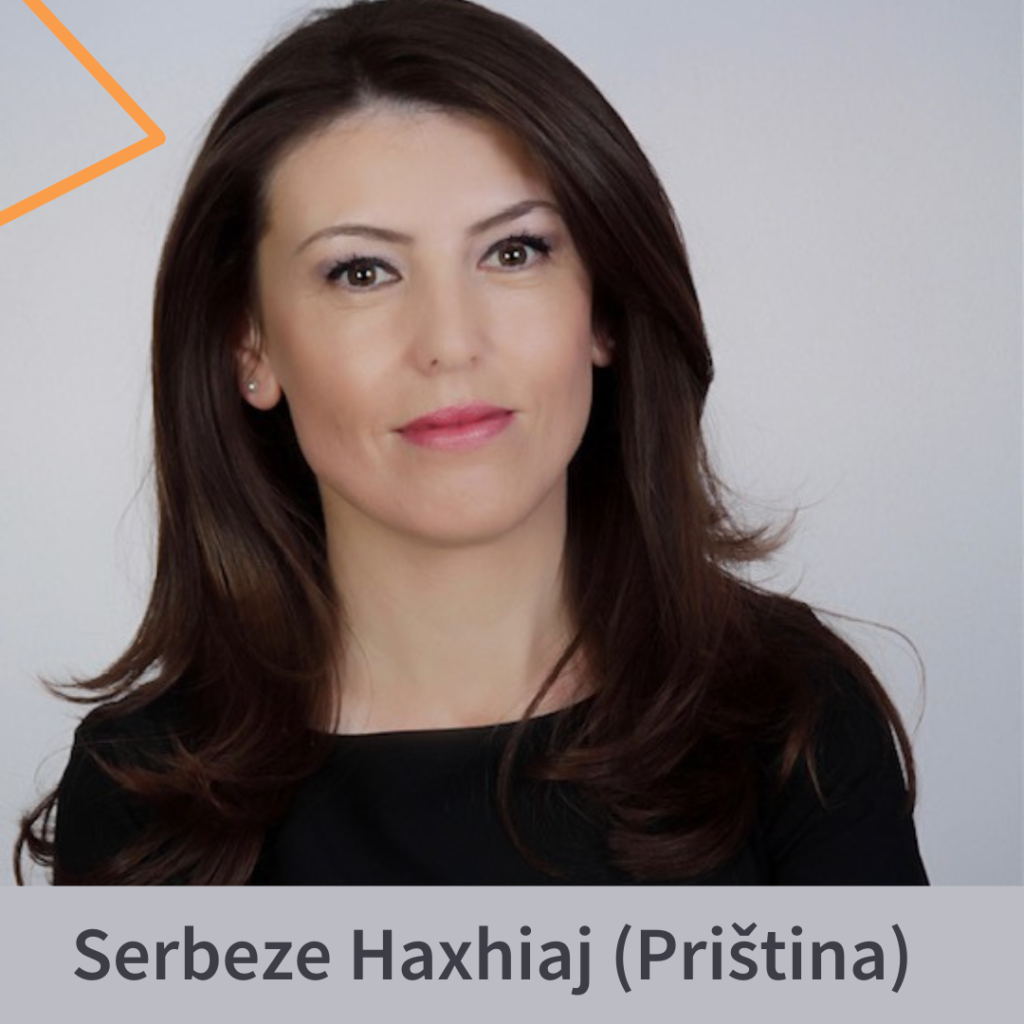
SERBEZE HAXHIAJ (Prishtina), a research journalist and editor at Radio Television Kosovo, aims to explore the experiences of Albanians and Serbs living in mixed villages such as Prilluzhë/Prilužje and Leshtar/Lještar, where interethnic relations were once harmonious. However, in Prilluzhë, animosities during and after the war led to the destruction of a bridge that connected the two sides of the village, preventing both communities from accessing their land. This resulted in the loss of livelihood for both Albanians and Serbs. The research’s objective is to emphasize the significance of coexistence and interethnic communication in establishing a shared present, collective future, and mutual respect.
Keywords: interethnic relations, coexistence, building the present

BENGI MUZBERG (Prizren), Deputy Director for Research and Programs at the Lumbardhi Foundation, a member of the preselection team at Dokufest, holds a PhD in Film Studies. Bengi plans to conduct a semiotic analysis of two films by Srđan Karanović, A Film with No Name from 1988 and Solemn Promise from 2009. The analysis will focus on film language, narratives, representation, and the ideology present in the films. The research methodology includes a comprehensive review of literature encompassing newspaper articles, film critiques, and published books. By employing this approach, Bengi aims to achieve a deeper understanding of the films’ meanings and their social implications. Bengi also plans to interview Srđan Karanović.
Keywords: film studies, Srđan Karanović, narrative representation in film

SRĐAN MILJEVIĆ (Belgrade), a writer from Belgrade and author of the book of short stories First Time for All of Us, brings over ten years of experience working in the civil sector. Srđan plans to collect love stories between Serbs and Kosovo Albanians that transcend borders, including queer couples. Through tête-à-tête interviews, Srđan will get to know the stories of selected couples, aiming to gain a deeper understanding of the challenges they face. His plan is to transform these collected stories into artistic narratives and make them available to the public through social media, exhibitions, and discussions which promote a positive discourse on Serbian-Albanian relations.
Keywords: interethnic love, cross-border relationships, couples

TEVFIK RADA (Prizren), co-founder of the publishing house Pykë-Presje, is an experienced researcher who has published numerous articles and books. For this research, Tevfik has access to the personal archive of renowned Kosovo publicist Shkëlzen Maliqi. Tevfik aims to explore untold stories of how contemporary art played a crucial role in promoting critical and alternative narratives about the relationship between Kosovo and Serbia during the 1990s and early 2000s. Through archival research, exploration of published and unpublished materials, and through conducting interviews with key figures, Tevfik seeks to investigate alternative artistic practices which emerged amidst political conflicts, involving artists and cultural workers from Kosovo and Serbia working together.
Keywords: nineties, alternative artistic practices, cultural workers
This fellowship program is implemented within the project Enhancing Cross-Border Cooperation and Social Engagement in the Western Balkans, with the support of the National Endowment for Democracy.